
Delta County Weekly Arrest Reports
The official Delta Police Blotter posts weekly PDFs you can open directly. Delta Police calls each report a summary of dispatch and officer-initiated calls that required documentation. Some contacts never get documented. Some documented events are not arrests either. A single week can mix service calls, traffic activity, and agency actions. A narrative may note a transport. It may say someone was booked into the Delta County Jail. Read the lines for what they say. This is the only local multi-day publication covering Delta County arrests week to week. Its scope is the City of Delta, though. It is not every arrest by DCSO, Cedaredge Police, Hotchkiss Police, or Paonia Police. Orchard City falls under DCSO patrol and has no separate blotter. So keep the agency and the geography straight. The official Delta Police page names the municipal agency behind the city's reports.
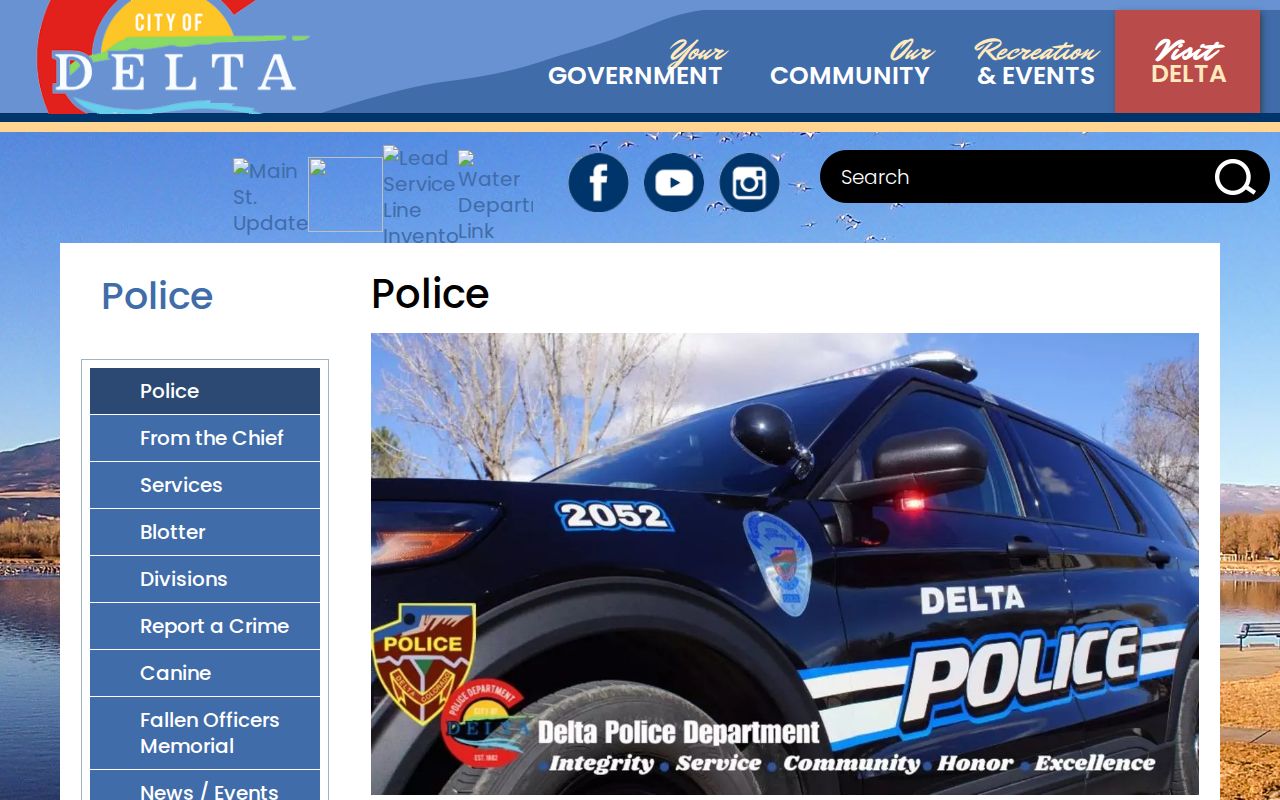
The department page gives the agency context, and the blotter index supplies each week's activity PDF.
Read Delta County Arrest Entries
Begin at the official index, not a copied news summary. Copied versions drop detail. The index has carried weekly coverage across 2025 and into a 2026 heading. Individual PDFs can shift or vanish, though. Note the exact date range printed for that week, then read every line in context.
- Select the PDF whose stated week contains the event date.
- Confirm that the entry describes Delta Police activity and note its CAD or incident number.
- Separate a contact, citation, arrest, transport, and jail booking. These are not equal terms.
- If booking is stated, use the jail or VINE route to check later custody rather than treating the PDF as live.
- Use the court docket only after matching the person, date, and case details.
CAD stands for computer-aided dispatch. Each number tracks one call or officer contact. A CAD entry might be a welfare check, an alarm, a civil standby, a traffic stop, or a simple information call. The number alone is not a criminal charge, so let the narrative support any arrest label.
Delta Police Blotter Fields
A weekly PDF can surface several record elements. What each PDF actually contains controls. Treat it as a blotter, not a booking schema promising bond, release, or photo data.
| Blotter element | How to interpret it |
|---|---|
| Week covered | The report window, not necessarily the publication date. |
| Date and time | When the reported call or officer activity occurred. |
| CAD or incident number | A reference for the police contact or report. |
| Location and call type | The reported place and nature of activity, which may not be an arrest. |
| Narrative | A summary that may mention citation, arrest, transport, or booking. |
| Agency action | What officers reported doing, subject to later record detail. |
| Charge language | An charge. |
No booking photo, bond amount, or release time should be assumed from a jail transport line. The weekly report simply does not carry that data. DCSO holds the county detention record, and the court holds whatever case record follows.
Delta Arrests Across Weekends
One weekly report naturally bundles weekdays and weekends together. That helps when the exact day of a Delta County arrest is unclear. It does not create a weekend arrest count. Nothing published here shows a predictable weekend surge in Delta County. What it does show is a multi-day span, which differs from a rolling 24-hour booking window. Holidays can slow office access, PDF posting, and records requests even while patrol and dispatch keep running. Read the week label as printed. A Sunday incident posted days later still happened Sunday. Never swap the post date for the arrest date. For an event too fresh for any weekly PDF, check Arrests Last 24 Hours. That same-day route also explains why Delta County's official pages list no public live roster and how to confirm custody directly.
Delta County Blotter Archives
Start with the official blotter index. Delta Police posts weekly PDFs there. The index lists 2025 weeks and carries a 2026 heading. Neither detail is permanent. Files get moved or pulled. Whenever you cite a report, save the week title, the source URL, and the date you opened it.
The 2025 links run from the January 20–26 report through the December 29–January 4 period. Some weeks cross a month or a year. Cite those with the full range Delta prints on the report itself. Never force a PDF into the year of its first or last day alone. The 2026 heading needs a live look too, so confirm a specific week exists before citing it.
Older PDFs sometimes vanish. The fix is a records request. Delta Police holds its own reports and municipal records. DCSO keeps its case, jail, dispatch, photo, and media records. The Delta County Records Search routing page warns that the county is not custodian of municipal or court records. Ask the right agency.
DCSO publishes no booking-photo retention schedule. Court retention rules do not govern a Sheriff photo automatically. Ask whether the specific record still exists. Also ask which rule applies and what redactions or fees to expect.
A good request stays narrow. Name the report, CAD number, event date, or week you want. Delta Police policy generally allows inspection within three full working days, with a seven-day extension for extenuating circumstances. Its services page lists review, redaction, copy, and body-camera fees, though policies and fee pages can change on their own schedules. Get a fresh estimate first.
Note: A missing online PDF does not prove the underlying agency record was destroyed, sealed, or never existed.
Delta Arrest News Cross-Checks
Local outlets sometimes republish Delta Police blotter material, and one Ground News item shows that secondary path. News copies spread fast.

The City of Delta remains the official origin. Check its blotter before any news copy. The Delta County Independent may carry blotter material as part of its countywide coverage, but its site lists no current crime landing page or photo policy. A newspaper is no substitute for the city's index. A story can drop entries, trim text, or linger online after an official correction.
Always work backward from news to the weekly PDF. Match the week and the narrative. The city source stays the authority. If the news wording differs, resist blending the two into a third version. Even the official blotter is only a brief summary, and the underlying police record can hold details the public report omits or redacts.
Commercial pages also claim Delta County data. They tend to be generic, stale, and tied to paid reports rather than an official roster. The major booking-photo sites show no Colorado Delta County section, so start every check with official police, jail, records, VINE, and court sources.
Delta Arrest Reports Versus Outcomes
An arrest means police took someone into custody. Booking is the jail's intake of that person. Arraignment is an early court appearance. Disposition is the later result the court sets for the case.
- Call
- A request for service or officer activity, not necessarily an arrest.
- Booking
- Administrative intake at a jail after custody or transfer.
- Bond
- Terms that may permit release while a case proceeds.
- Disposition
- The case result, such as dismissal, acquittal, diversion, or conviction.
Use the Colorado Judicial docket search for hearings. Then verify the final court file. The docket lists dates and appearances, while the actual file holds the result.